A great sandwich gets a customer in the door once. Service decides whether they come back every week — and in a deli, service isn't white tablecloths, it's speed, accuracy, and being known. Everything below is something an independent shop can start this week without new construction or a bigger payroll.
Win the lunch rush first
Most delis earn their reputation in about ninety minutes a day. If the noon line moves, customers forgive almost anything else; if it stalls, nothing else matters.
- Stage before the wave. Slice the high-movers, portion proteins, and stock the line before 11:30 so nobody is slicing to order for a basic turkey at peak.
- Split the jobs. The person on the register shouldn't be building sandwiches at rush. Taking orders while assembling is where both mistakes and stalls come from.
- Give pickup its own spot. Call-in and online orders belong on a labeled shelf away from the ordering line, so those customers grab and go without wading through the queue.
- Post the menu where the line forms. Customers who decide while they wait order in seconds. A board or a stack of handouts at the back of the line pays for itself daily.
Accuracy beats raw speed
A fast wrong sandwich is worse than a slow right one, because the mistake gets discovered at a desk twenty minutes away — and that customer usually doesn't complain, they just quietly stop coming. Build accuracy into the process instead of hoping for focus: write or print every ticket instead of trusting memory, read orders back during busy hours, label wrapped sandwiches immediately, and make modifications visually loud — "no onions" should look different on a ticket than the default build. When a mistake happens anyway, remake it instantly and without a receipt interrogation. The remake costs a few dollars; the argument costs a regular.
Train the counter to sell what you slice
Staff shouldn't just take orders — they should know the difference between the pastrami and the corned beef, which cheese melts best, and what they would actually order themselves. Two habits build this fast: have everyone taste everything, because a staffer who has tried an item sells it honestly, and offer slices over the counter. A taste of the good Swiss while a customer waits upgrades orders more reliably than any sign — and it's exactly the kind of experience no chain counter offers.
Recognize your regulars — then formalize it
"The usual?" is the most powerful sentence in this business. Learn names, remember orders, and greet people like you're glad they're back, because you are. Then back the human touch with structure so it survives staff turnover: a loyalty program that tracks visits and rewards them keeps the habit going even when the owner isn't behind the counter, and it gives occasional customers a concrete nudge to become weekly ones.
Stop losing orders to a ringing phone
The phone rings hardest exactly when nobody can answer it — mid-rush, gloves on, both slicers running. Every missed call at noon is likely a missed order, and often a customer who simply calls the next deli on the list. Two fixes work together: move routine orders to online ordering so the phone rings less, and put a reliable answer behind the calls that still come. Dinevate's voice AI picks up, takes the order, and sends it into your ticket flow even when every human in the shop has their hands full — for a counter operation with two or three people at peak, that's the difference between capturing the rush and letting it ring out.
Fix catering before it breaks
Catering is the highest-ticket service most delis offer and the easiest to fumble. The same problems come up everywhere, and every one of them is preventable:
- Vague orders. Take catering on a form — printed or online — with headcount, delivery time, address, and selections spelled out. "Sandwiches for about twenty" captured on a sticky note is how disasters start.
- No lead-time rule. Publish a cutoff, such as 24 hours for large orders, and hold it. One heroic same-day platter teaches customers to expect heroics always.
- No confirmation. Call or message the day before to reconfirm count, time, and address. Thirty seconds prevents the worst catering failure there is: beautiful food arriving at the wrong time.
- Packing chaos. Pack from a checklist — platters, labels for dietary flags, napkins, utensils, condiments. The order isn't done when the sandwiches are; it's done when the box is complete.
Done right, catering compounds. The office manager who ordered once becomes a repeat account, and thirty new people at that lunch just tasted your food.
Keep quality identical across shifts
Regulars don't just come back for a good sandwich — they come back for the same sandwich. If the Tuesday-morning crew builds a Reuben differently than the Saturday crew, customers experience it as a gamble, and gambles don't become habits. Write build charts with portions and sequence for every menu item and tape them at the station, keep photos of finished builds where staff can see them, and taste-test as part of every training week. The goal is simple: the owner should be able to take a day off without the food changing. Consistency is invisible when you have it and expensive when you don't.
Stand out where chains can't follow
You will not out-advertise a national chain or out-discount a grocery deli counter, so compete on the things that don't scale: meats roasted in-house and sliced to order, a counter person who remembers a name, a special that changes because the owner felt like it, a sponsorship banner at the local field. Lean into what's yours — name the house-made items on the board, put faces and a story on your website, and show up in the neighborhood. That's the moat.
Close the loop on every complaint
Most unhappy customers never complain — they just disappear. Treat every complaint you actually hear as a gift and a warning about ten silent ones. Fix the immediate problem fast and generously, then fix the process behind it: if online orders came out wrong twice this month, the problem is the ticket flow, not bad luck. Follow up when you can. A short "we fixed the thing you flagged" note turns a critic into an advocate more reliably than a coupon does.
Stay in touch between visits
Even devoted regulars fall out of the habit — a new commute, a vacation, a competitor's opening week. A simple email list pulls them back: this week's special, a new sandwich launch, a holiday catering reminder in November. One genuinely useful message a week from a shop people already like doesn't read as marketing; it reads as news from the neighborhood.
None of this requires reinventing your deli. Pick the weakest link — the line, the phone, the catering scramble — fix it this month, and move to the next. Service improves the same way regulars are made: one repeated, reliable experience at a time.
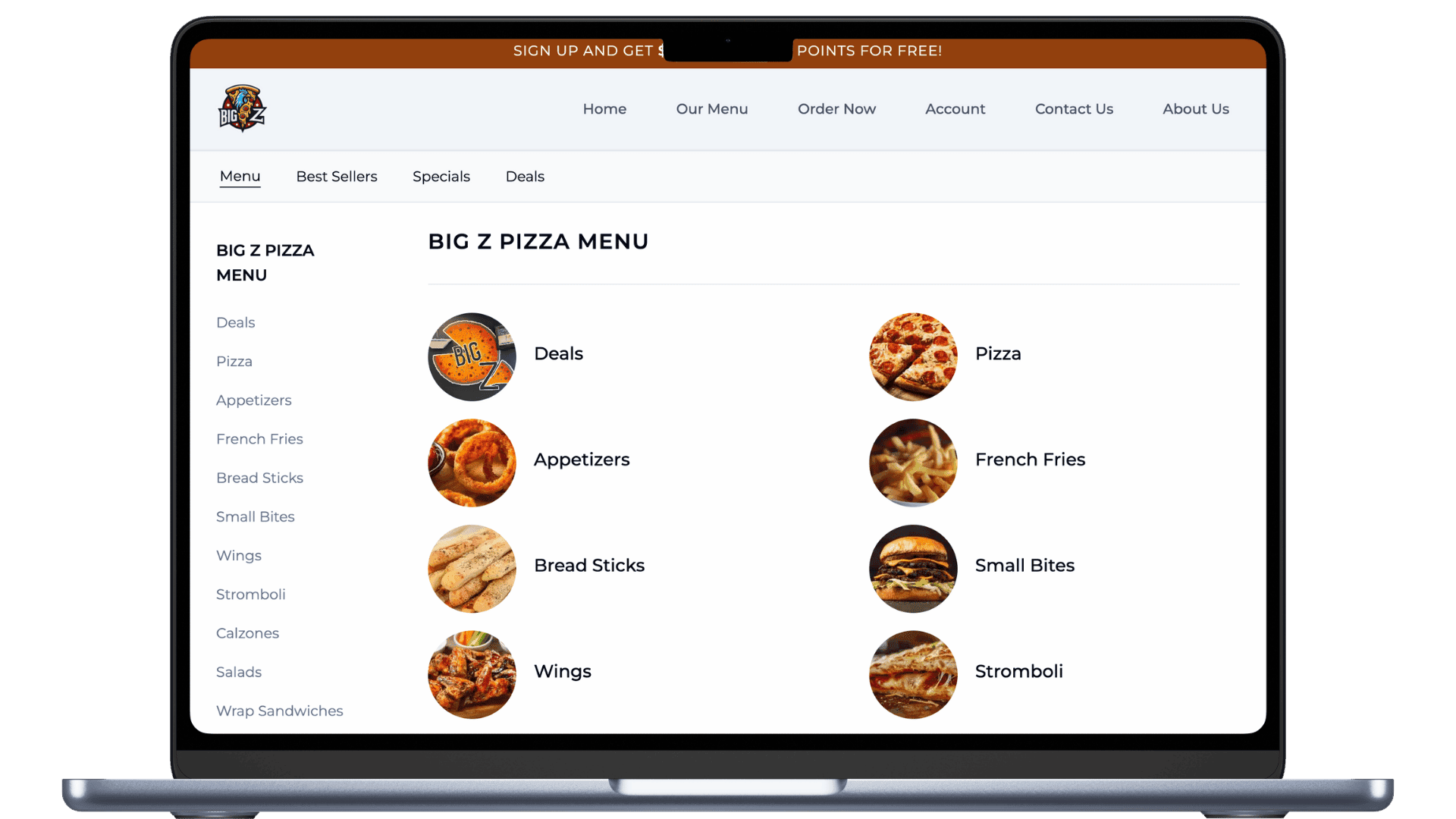
Modern online ordering system that makes it easy for customers to order from your restaurant
Frequently Asked Questions
What's the fastest way to speed up a deli lunch line?+
Prep before the wave and split the jobs. Slice and portion your high-movers before 11:30, keep the register separate from sandwich assembly, and give pickup orders their own labeled shelf so they don't clog the ordering line. Most slow lines are prep problems, not staffing problems.
How should I handle a wrong order?+
Remake it immediately and generously, with no receipt interrogation, then look for the process gap that caused it — orders taken from memory and unmarked modifications are the usual culprits. A remake costs a few dollars; an argument costs a regular and often a public review.
How do I make deli catering run smoothly?+
Take every order on a form with headcount, time, and address; publish a lead-time cutoff and hold it; reconfirm details the day before; and pack from a checklist. Nearly every catering disaster traces back to a vague order or a skipped confirmation call.
How does a small deli compete with chain sandwich shops?+
Compete where chains can't follow — house-roasted meats sliced to order, staff who know regulars by name, and a real presence in the neighborhood. Then add the conveniences customers now expect anyway, like online ordering and a simple loyalty program, so the chain's ad budget matters a lot less.