Your display case is the hardest-working salesperson in the building. It never calls in sick, it pitches every single guest, and much of what it sells was never on anyone's list: people come in for a coffee or a loaf and leave with a croissant because it looked irresistible at the glass. The case is also your best advertising, visible to everyone who walks in or peers through the window. Merchandising it well costs almost nothing and pays every day, and this is what separates a case that sells from a case that just stores.
Arrange for the eye, not for the tray
Bakers tend to load the case for their own convenience: straight rows, whatever fits the sheet pan. Customers buy with their eyes, so arrange for theirs instead.
- Eye level is decision level. Put your highest-margin, best-looking items where an adult's gaze lands first, and put kid favorites low where kids will spot them and start negotiating.
- Vary the height. Risers, cake stands, and tiered platters turn a flat spread into a landscape. One showpiece up on a stand, a layer cake or a braided loaf, gives the whole case a centerpiece.
- Group in odd numbers. Three or five of an item reads as styled abundance, while strict even rows read as inventory waiting to be counted.
- Lead with heroes. The first thing visible from the door should be your signature item, not the sandwich bread.
- Full reads as fresh. A generously stocked case signals a busy bakery. As trays sell down, move items to smaller platters so the case looks curated instead of picked over.
Light it well and keep the glass invisible
Warm LED strips make crusts look golden and laminated layers look deep, while cool bluish light makes the same pastry look like a photocopy of itself. Aim lighting to avoid shadows from shelf frames, and confirm the case lights are actually on before the door opens, because an unlit case at 7 a.m. quietly tells the room the good stuff is not ready. If you are shopping for a new case, prioritize lighting quality, easy-to-clean glass, and proper humidity control over sheer size, since a small case done well outsells a big case done badly.
Then treat the glass as part of the lighting. Fingerprints, smears, and scattered crumbs undo everything the bakers did at 4 a.m. Wipe the customer side every hour, wipe the inside at every restock, sweep shelves as trays change, and deal with condensation before it fogs the view. Nothing else in this article matters if customers cannot see through the glass, and nothing kills appetite faster than a case that looks unkempt.
Signs that sell instead of just labeling
Every item needs a name and a price, no exceptions. An unpriced pastry forces a question most customers will not ask; they simply choose the item that does not make them feel awkward. Beyond that baseline, a good case card does quiet selling:
- One short, honest descriptor covering the flavor, texture, or ingredient that makes the item special. Brown butter and sea salt sells harder than the word cookie ever will.
- Call out house-made, local flour, or the farm your eggs come from, when it is true. Provenance is a big part of why people choose a bakery over a supermarket.
- Flag what customers ask about anyway: contains nuts, vegan, gluten-free, where accurate.
- When something sells out, say when it returns. A back-tomorrow-at-7 card turns disappointment into an early visit, while an empty tray with no explanation is just a small failure on display.
Handwritten cards feel personal and update easily; printed cards stay legible and on-brand. Either works. Illegible or missing does not.
Rotate the case through the day
A display case is not a museum exhibit, and it should look different at 3 p.m. than it did at 7 a.m. Mornings lead with croissants, muffins, and breakfast breads in the prime spots. After lunch, move cookies, bars, and afternoon-coffee companions forward. As the day winds down, consolidate everything onto fewer shelves so the case still looks intentional, and run a deliberate end-of-day play: markdown boxes in the final hour, a donation routine, or baking tighter until you sell out, whichever fits your brand and your margins. Make the reset a closing task so tomorrow opens styled instead of scrambled.
Keep a small buffer of your best seller in the back so the hero spot never sits empty through the afternoon lull, and write down what sells out and when. The case is your cleanest daily read on demand, and a month of those notes will tell you more about what to bake than any gut feeling.
Put the case in the path
Placement does as much work as arrangement. The case should sit where the entrance and the register line naturally carry people past it, because time spent waiting in line is unhurried browsing time you already own. Put small impulse items, single cookies and chocolates and boxed minis, at the register end where wallets are already out. And in a small shop, the case doubles as the room's centerpiece: a warm, glowing case plays the same role in a cozy, small-space coffee shop that a fireplace plays in a living room. If the floor plan is tight, angle the case so it is visible from the door and the sidewalk at once, so the glass works the window as hard as it works the line.
Extend the case beyond the glass
Most customers now see your case on a phone before they see it in person. Keep recent, warm photos of the actual case and your hero items on your Google Business Profile and refresh them when the lineup changes; those photos are a core piece of local SEO for an independent bakery or cafe. Your website menu should mirror what is really behind the glass, with photos and honest availability, which is far easier when menu management updates everything from one place instead of five.
Then let the case take orders while you sleep. Preorders for whole cakes, holiday boxes, and weekend pickups smooth out production, guarantee sellouts, and capture the customer who fell in love with the case on Tuesday but could not carry a cake to the office. An online ordering system built for independents, like Dinevate's, handles preorder pickup times without adding a single phone call to your morning.
A five-minute daily case checklist
- Glass wiped inside and out, case lights on and working.
- Every item named and priced, with sold-out cards noting the return time.
- Heroes at eye level, showpiece on its stand, odd-number groupings intact.
- Trays consolidated so the case reads full rather than picked over.
- One photo taken whenever the lineup changes, for your profile and your socials.
None of this requires a new case or a remodel. It requires looking at the glass the way a first-time customer does, every single day, and treating those few square feet like the revenue engine they are.
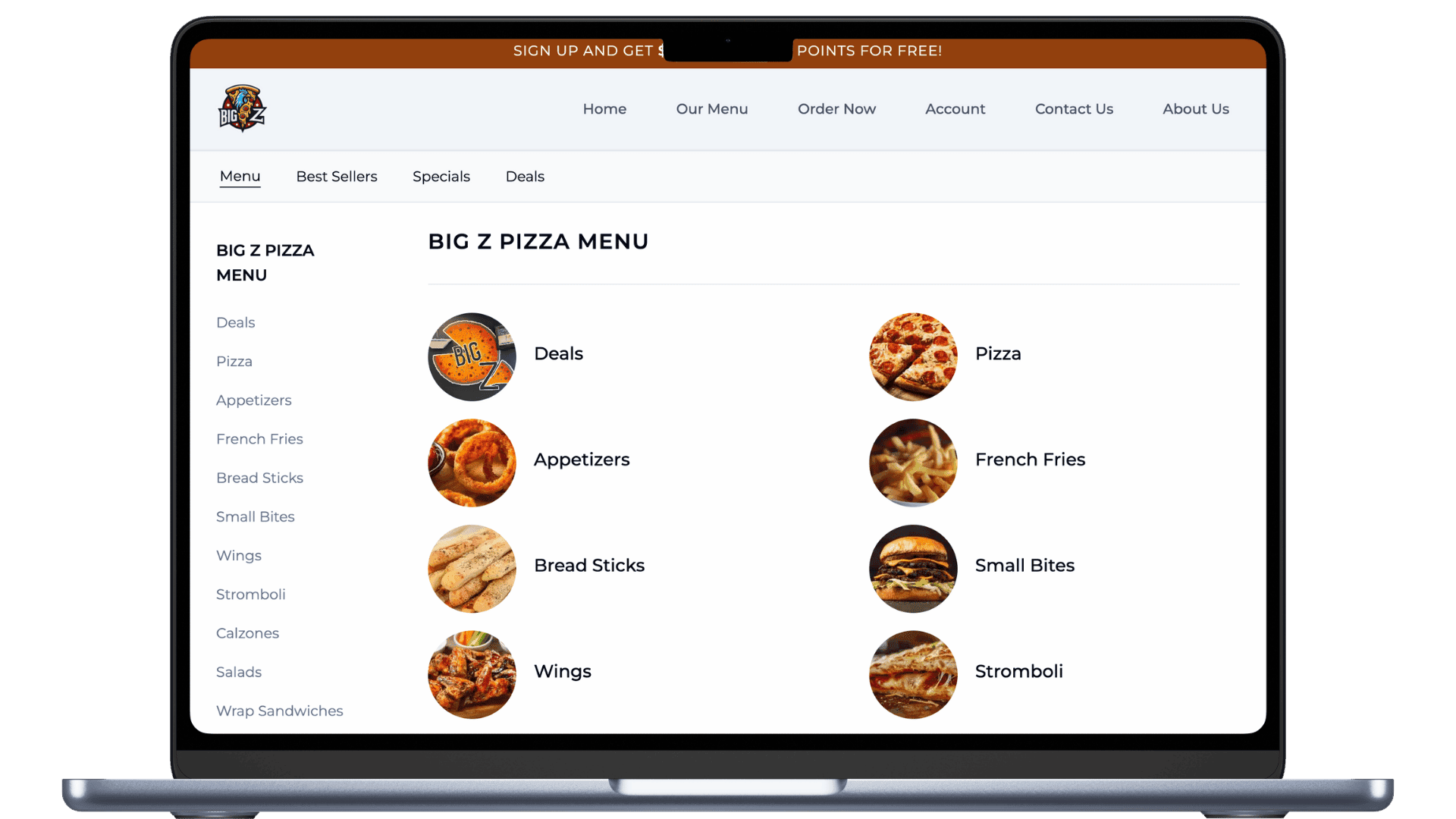
Modern online ordering system that makes it easy for customers to order from your restaurant
Frequently Asked Questions
What should go at eye level in a bakery display case?+
Your highest-margin, most visually striking items, the ones you want to be known for. Eye level is where buying decisions happen, so treat it as prime real estate and rotate seasonal heroes through it. Everyday staples like sliced bread can live lower, because people seek those out anyway.
How do I display baked goods at a farmers market?+
Build height with tiered stands and crates so the table reads as abundant from a distance, keep everything shaded and covered per your market's rules, and price every item on signs readable from a few feet away. Consolidate as you sell down so the table never looks picked over. Bring one showpiece item that stops foot traffic even if it sells slowly.
How often should a display case be restocked or rearranged?+
Continuously through the day, with a real rearrangement at each daypart shift: breakfast pastries forward in the morning, cookies and afternoon items forward after lunch. Consolidate onto fewer shelves as stock sells down. Wipe the glass hourly and do the full reset at close so the case opens styled.
Do display case signs really affect sales?+
Yes, mostly by removing friction: a missing price makes many customers skip an item rather than ask. A name, a price, and one honest descriptive line is enough. Signs also carry trust details like house-made or local ingredients, which is often the reason someone picks a bakery over a grocery store.