Burgers can be one of the best-margin items in food service — inexpensive base ingredients, a price customers accept, endless upsell paths. They can also be a break-even treadmill where volume grows and the bank account doesn't. The difference is rarely traffic. It's whether the owner knows the numbers on every popular item and manages them like they matter. Here's how to do that, calculation by calculation.
How profitable is a burger, really?
Start with food cost percentage: what the ingredients cost you, divided by the menu price. Here's a worked example with hypothetical numbers — your invoices will differ, which is exactly why you run it yourself.
Say your cheeseburger uses a fresh-beef patty that costs about $1.90, a brioche bun at $0.50, cheese at $0.30, produce at $0.35, sauce and pickles at $0.15, and a wrapper and bag at $0.10. That's $3.30 of ingredients. Sell it at $10.50 and food cost is about 31 percent.
The remaining $7.20 is not profit — it's what pays the cook, the rent, the utilities, and the card fees, with actual profit being whatever survives all of that. But that per-item contribution is the number you manage, and two lessons fall out of it immediately:
- Dollars beat percentages. A $13 signature burger at a 35 percent food cost hands you $8.45 toward overhead; an $8 value burger at 28 percent hands you $5.76. The "worse" percentage makes you more money per ticket. Chase contribution dollars, not a vanity percentage.
- Small leaks scale. At hundreds of burgers a week, a dime of untracked cost per build is thousands of dollars a year. Portioning discipline matters more than any single price change.
Fries and drinks are the margin engine
On most burger menus the sandwich brings the customer in and the sides make the money — relative to their menu prices, potatoes and fountain syrup are among the cheapest things you buy. Continue the worked example: say fries cost you about $0.60 to produce and sell for $3.95, and a fountain drink costs $0.30 and sells for $2.75. Bundle all three into a $15.95 combo — a $1.25 discount off ordering separately — and you've added just $0.90 of ingredient cost for $5.45 of extra revenue. The ticket's contribution jumps from $7.20 to $11.75, discount included. That's why the register script should always ask the combo question.
Watch the fry station, though, because it's also where margin leaks. Overfilled baskets, unweighed scoops, and quiet extra fries for the regulars turn your best item into an average one. A portion scoop and a scale recalibrate the habit fast.
Price add-ons so upgrades earn their keep
Bacon, extra patty, avocado, premium cheese: every add-on should carry at least the margin of the base item, because each one also adds labor and complexity. The quick check: if an extra patty costs you $1.90, a $2.50 upcharge is thin once labor touches it, while $3.50 is honest. Customers accept add-on pricing far more readily than base-price increases, which makes a well-priced upgrade path one of the safest margin levers you have. Premium builds do the same job in one step — a signature double with a named house sauce justifies a price the plain cheeseburger never could.
Engineer the menu around your stars
Cross each item's margin with its sales count and everything lands in one of four boxes, each with an obvious move:
- High margin, high volume: your stars. Feature them — top of the menu, photos online, staff recommendations.
- Low margin, high volume: re-cost, re-price, or re-build. Sometimes a fifty-cent move or one cheaper component changes the box it lives in.
- High margin, low volume: promote or reposition — these items are usually just invisible.
- Low margin, low volume: cut them. Every removed item simplifies prep, ordering, and training.
A tight menu is itself a margin strategy: less waste, a faster line, fewer mistakes. If the board has grown past what one grill cook can execute flawlessly at peak, pruning is the cheapest profitability project available to you.
Control portions like the money they are
Consistency protects margin and reputation at the same time — customers notice a shrinking burger, and your books notice a growing one. Portion patty balls by weight, count cheese slices, move sauces to measured bottles or pumps, and keep a daily waste log covering what got thrown out, remade, or comped. None of it is glamorous; all of it shows up in the monthly numbers. And when a major invoice moves — beef is volatile — re-cost the menu that week, not next quarter.
Mind the commission line on your best sellers
Delivery-app commissions land hardest on exactly the items this article is about: your most popular builds. Run the numbers per order. Sold direct, the worked-example combo brings $15.95 with $4.20 of ingredients, leaving $11.75 of contribution. Route it through an app that takes, say, a quarter of the ticket, add sturdier packaging, and roughly $4.60 of that contribution disappears before labor touches anything. App orders can look like growth while contributing far less than the same order sold direct.
The fix isn't necessarily quitting the apps — they bring discovery. It's moving your regulars onto a channel you keep. Compare direct ordering versus delivery apps honestly, then make direct the easy default: a fast online ordering system on your own site, pickup that beats delivery time, and a nudge in every bag. Commission-free direct ordering is the core of what Dinevate builds for independent restaurants, and for high-volume, modest-ticket food like burgers it's often the single biggest margin lever on this list.
Raise prices in small, regular steps
Owners who fear pricing tend to freeze for two years and then lurch a dollar at once — the exact move customers punish. Quarterly re-costing with small adjustments keeps you current, and structure protects perception: hold the entry-level single where price-checkers can see it, take increases on premium builds and add-ons, and let combos absorb changes so the headline numbers move less. If a beloved item's costs have truly outrun its price, rebuild and rename it rather than charging more for the identical thing.
Throughput is margin at peak
On a Friday night, the burgers you couldn't serve are margin you'll never see. Speed work is profit work: batch and stage for the volume you actually get, keep one person expediting, and let order-ahead tickets smooth the wave — orders that arrive before the line forms are capacity you didn't have to build. A short, engineered menu pays off twice here: fewer builds means faster hands.
The weekly numbers habit
Profitability is a habit, not a project. Once a week, look at four numbers: food cost percentage, item-level sales mix, average ticket, and the share of orders coming from each channel. Thirty minutes catches every drift while it's still cheap to fix — the creeping portion, the star item quietly slipping, the app share climbing past comfort. For an outside read on where your operation stands, a tool like the restaurant analyzer makes a fast first pass. And since the items worth engineering around shift with demand, keep one eye on what burger customers want right now — margins are easiest to grow on the items people are already lining up for.
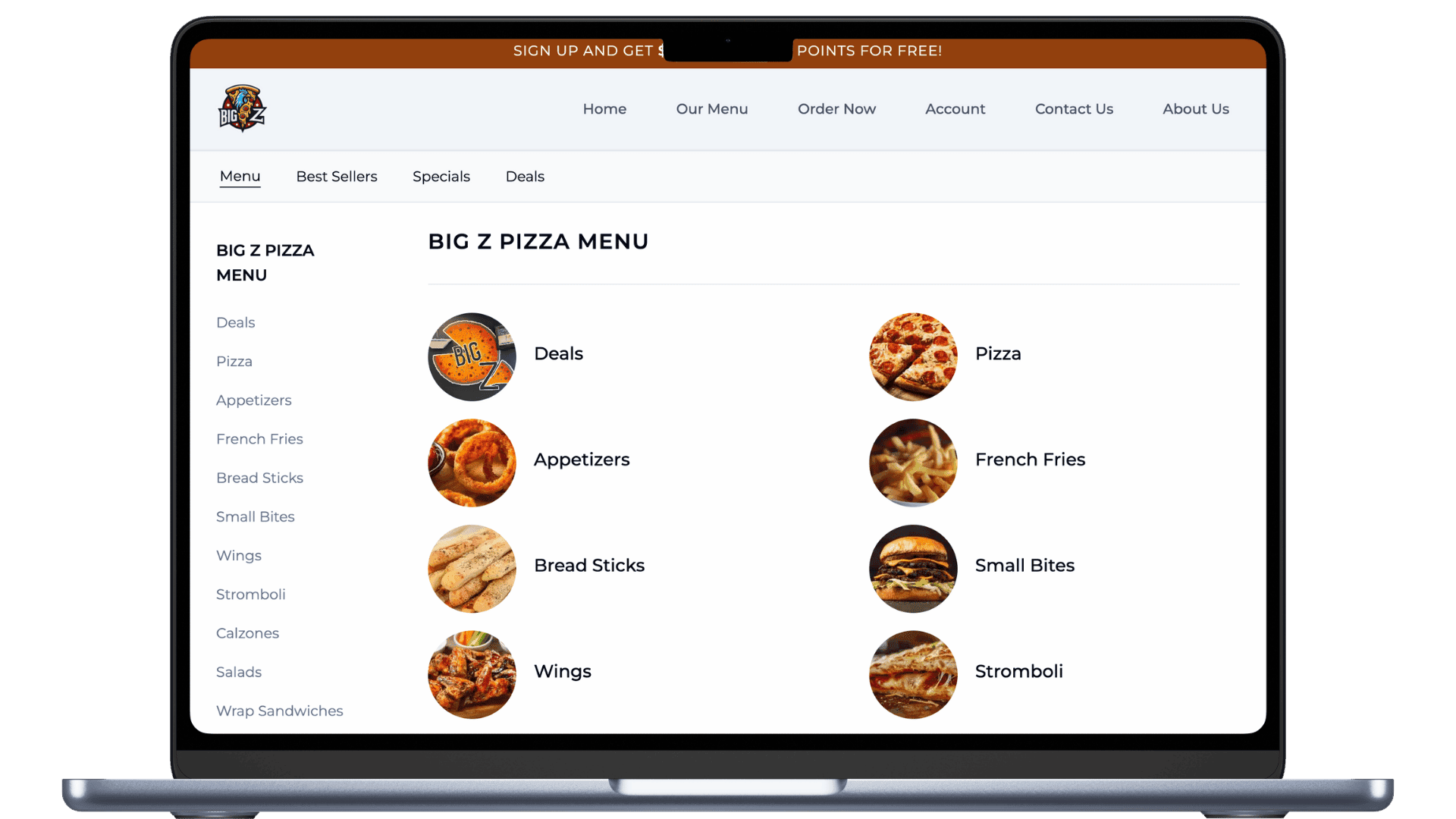
Modern online ordering system that makes it easy for customers to order from your restaurant
Frequently Asked Questions
How profitable are burgers?+
There's no universal number — it depends on your costs, volume, and sales channels. A burger's ingredients are typically a modest fraction of its menu price, which is what makes the format attractive, but labor, rent, and fees consume most of the gap. Track contribution dollars per item — menu price minus ingredient cost — and watch it weekly; that's the number that tells you whether your best sellers actually make money.
How do I calculate my burger's food cost?+
Add up the invoice cost of every component — patty, bun, cheese, produce, sauces, and packaging — and divide by the menu price. If the build costs $3.30 and sells for $10.50, food cost is about 31 percent. Re-run the math quarterly, and immediately any week a major invoice like beef jumps.
Do combo meals help or hurt margins?+
They help when the attachments are high-margin, and fries and fountain drinks almost always are. A small bundle discount that reliably attaches two cheap-to-produce items raises the total contribution per ticket. Check your own numbers: the combo should hand you more dollars after ingredient costs than the burger alone.
Should I raise prices or cut costs first?+
Do the costing first — it usually reveals both. Fix portioning, waste, and commission leakage before repricing, because those recover margin without touching the customer. Then take small, regular price adjustments on premium items and add-ons rather than rare, dramatic jumps across the whole board.