Every restaurant is two businesses sharing a wall. The front of house sells hospitality one guest at a time; the back of house manufactures food on a deadline. Guests only get a great night when both operate as one system — and most of a restaurant's expensive failures, from remakes and comps to cold food and good people quitting, happen in the gap between them. Here is what each side actually covers, why they clash, and the systems that close the gap, starting with the fastest fixes for order errors.
What front of house and back of house actually cover
Front of house (FOH) is every role guests see and every space they occupy: hosts, servers, bartenders, food runners, bussers, and floor managers, working the dining room, bar, patio, and entry. Back of house (BOH) is production and support: the chef or kitchen manager, line cooks, prep cooks, and dishwashers, working the kitchen, walk-in, dry storage, and office. Hotels use the same split — guest-facing versus operational — which is why the vocabulary travels across the hospitality industry. The border between the two is the pass: the window where food and information change hands. Most FOH-versus-BOH problems are really pass problems.
Why the two sides clash
The conflict is structural before it is personal. FOH absorbs pressure guest by guest and often earns tips; BOH absorbs pressure ticket by ticket, in the heat, usually at a flat hourly rate. The FOH job is to say yes to guests; the BOH job is to protect consistency and speed, which sometimes requires saying no. Each side watches the other's slowest moments and never sees their rush. Left alone, those asymmetries harden into the oldest rivalry in the industry.
Two rooms, two voices
Service voice and kitchen voice are different dialects, and the difference causes real friction. The dining room runs on warmth, patience, and softened language. The line runs on volume and brevity — “behind,” “hands,” “all day” — because clipped speech is safety and speed in a room full of knives and open flame. Trouble starts when each side grades the other by its own dialect: servers hear rudeness, cooks hear vagueness. Teach new hires explicitly that both voices are correct for their room, and set a neutral standard for the handoff points: item, table, problem, time needed. Facts travel across the pass better than tone does.
How to reduce order errors between front of house and the kitchen
Order errors are the most fixable FOH-BOH failure, because nearly all of them are transmission errors — the guest's intent degrading somewhere on its way to the line. Close the leaks in this order:
- Kill verbal orders. Every order goes through the POS, no exceptions, including the owner's. Verbal orders and handwritten scraps are where modifiers go to die.
- Standardize modifier language. If “no onions” can be entered four different ways, build buttons for the common modifications so the kitchen reads identical words every time. Save free-text notes for true edge cases.
- Read it back twice. The server repeats the order to the guest; the line calls the ticket back when it fires. Two read-backs catch most errors before they cost food.
- Give allergies their own channel. Flag on the ticket, announce out loud at the pass, confirm at handoff by whoever runs the plate. An allergy is never just a note.
- Run an expo at peak. One person owns the pass, matches plates against tickets, and catches mistakes before they travel to the dining room.
- Digitize the error-prone channels. Phone orders scribbled on a pad while two other things are happening are most restaurants' worst accuracy channel. When an AI host like Dinevate Voice answers the phone, the order reaches the kitchen as a structured ticket the guest already confirmed — and pulling every channel into one queue with the Dinevate Order Manager means the line works from a single list instead of a printer, a tablet, and a sticky note.
Communication systems that close the gap
- A pre-shift lineup with both sides in the room. Five minutes covering 86s and near-86s, specials with a taste, large parties, and one number from yesterday. If schedules will not allow one huddle, the manager carries the identical brief to both rooms.
- An 86 board with a ritual. The board only works if the kitchen updates it the moment a count drops and calls the change out loud. A stale 86 board is worse than none, because servers stop trusting it.
- Visible ticket times and all-day calls. When servers can see ticket status on a screen or board, the constant “how long on table twelve” interruptions stop and the line gets its rhythm back.
- Closed-loop replies. Every call across the pass gets a “heard.” Silence is how a six-top's appetizers get fired twice — or never.
- A five-minute debrief after service. What stalled, what ran out, what to prep differently tomorrow — logged where both rooms can see it.
The ideal workflow between kitchen and front of house
- The host seats with pacing in mind — a flood of tables at once buries any kitchen, so stagger where possible and warn the pass when a wave is unavoidable.
- The server enters a complete, standardized order: courses marked, modifiers from the buttons, allergies flagged.
- The kitchen acknowledges, fires by course, and calls all-day counts as tickets stack.
- Expo matches every plate to its ticket, checks modifiers, and calls hands.
- Runners deliver by seat number — no auctioning off plates at the table.
- The server checks back within a few minutes; any problem returns to the pass as facts: item, table, issue.
- Comps and remakes get logged by cause and reviewed weekly with both sides present.
Notice that every step is a handoff with an owner and a confirmation. That is the entire secret: nothing crosses the pass, in either direction, without someone accountable on both ends.
Handle conflict like a manager, not a referee
When a flare-up happens, cool it fast and move it off the floor — never in front of guests, never on the line mid-rush. Park it, finish service, then dig for the root cause. Most repeated conflict traces back to a broken system rather than a bad person: unclear fire times, chronic under-prep, seating floods, a stale 86 board. Fix the system visibly, so both sides watch it get fixed. Then give both rooms one scoreboard — ticket times, remake counts, guest complaints — so the metrics are shared instead of side-versus-side. Deliberate mixing helps too: cross-training hours, a cook following their own dish to the table, joint pre-shift games like the ones in our restaurant team building guide. Respect built in calm hours is what survives the rush — and if the recurring fight is about speed, start with our guide to reducing wait times, because slow tickets and bad communication feed each other.
Where AI helps train BOH staff — and where it cannot
AI is genuinely useful for the knowledge layer of back-of-house training: turning your recipes and prep sheets into quizzes and flashcards, generating station checklists, translating SOPs into a new hire's first language, and answering “what is in the house marinade” without interrupting a trainer mid-rush. It cannot teach the physical layer. Knife skills, timing, station flow, and composure at a full board are learned by doing, next to a person who can watch hands and correct them. The honest play is to let AI absorb the paperwork of training so your best people spend those hours coaching on the line instead of photocopying recipe binders.
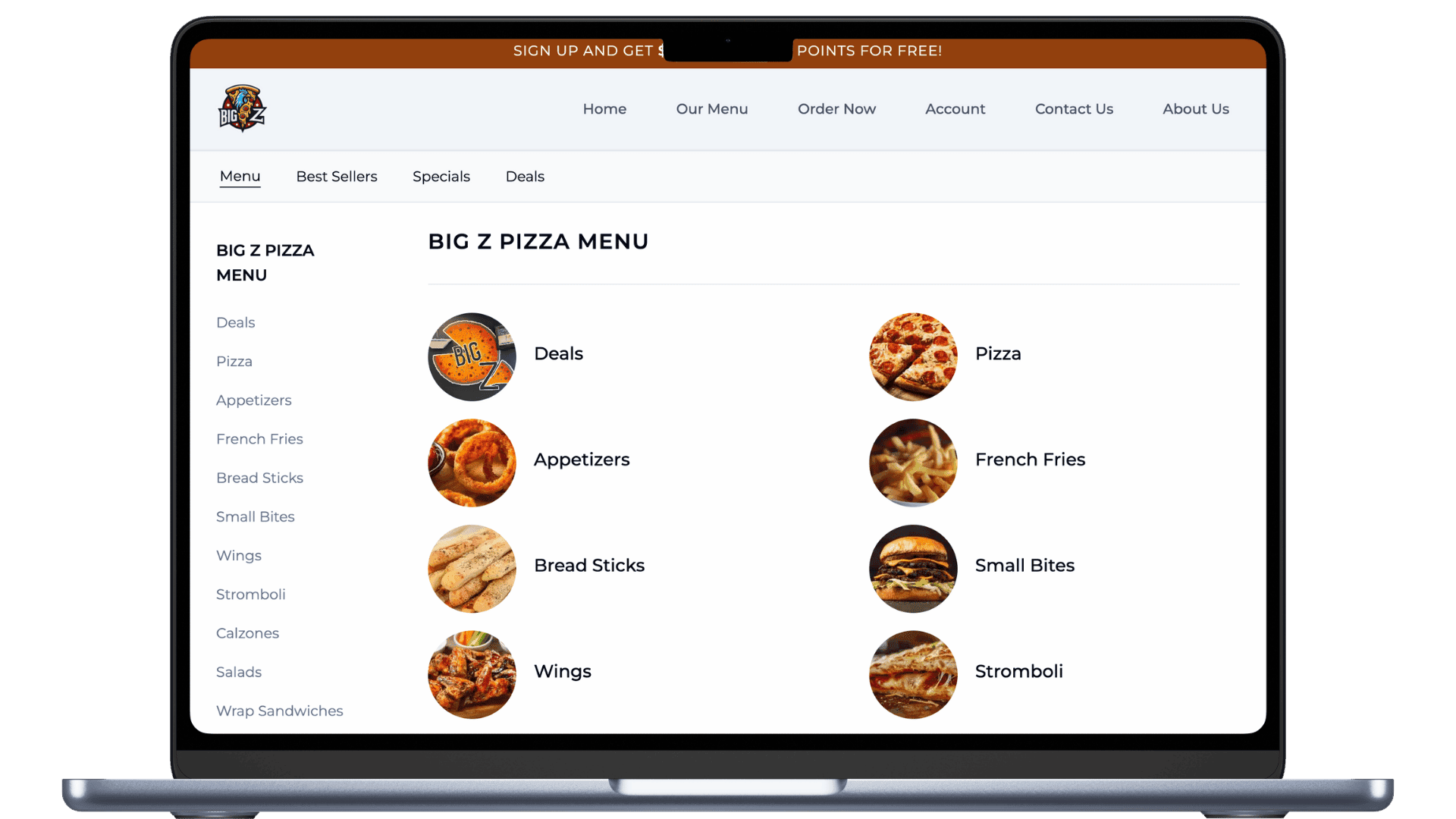
Modern online ordering system that makes it easy for customers to order from your restaurant
Frequently Asked Questions
What is the difference between front of house and back of house?+
Front of house covers every guest-facing role and space — hosts, servers, bartenders, runners, the dining room and bar. Back of house covers production and support: cooks, prep, dishwashers, the kitchen and storage areas. The pass is where the two meet, and hotels use the same guest-facing versus operational split.
How can I reduce order errors between front of house and the kitchen?+
Route every order through the POS with standardized modifier buttons, require read-backs on both ends, and give allergies a separate ticket-plus-verbal protocol. Staff an expo during peaks to catch mistakes at the pass. Then digitize your weakest channel — usually phone orders — so tickets arrive structured instead of scribbled.
What is the ideal workflow between the kitchen and front of house?+
Paced seating, a complete standardized ticket, firing by course with all-day calls, an expo check at the pass, seat-numbered running, and a quick server check-back that returns problems as facts. Every handoff needs an owner and a confirmation. Log comps and remakes by cause and review them weekly with both teams in the room.
Why do front of house and back of house teams clash?+
The pressures are different by design: guest-by-guest emotional labor versus ticket-by-ticket production heat, often with different pay structures layered on top. Each side sees the other's downtime and never their rush, and their communication styles read as rude or vague across the pass. Shared briefings, visible information, one set of metrics, and cross-training dissolve most of it.